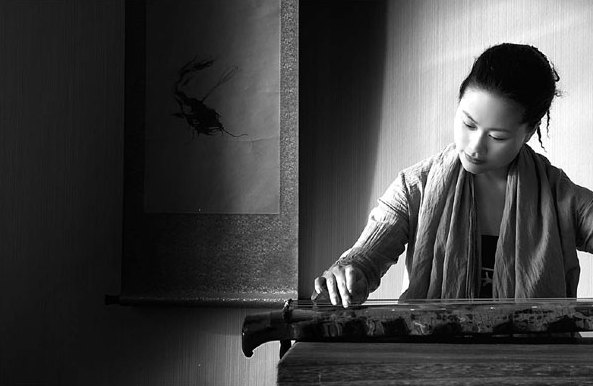
Wu Na
Introduction
Wu Na is an accomplished and innovative guqin musician, known for her unique approach to modernizing this ancient Chinese instrument. With over two decades of experience, she has sought to bring the seven-stringed zither, the guqin, to a wider audience by blending traditional Chinese music with contemporary genres such as jazz, electronica, and rock. As the first musician in China to earn a Master's degree in guqin performance, Wu Na has become a central figure in the evolution and popularization of this culturally significant instrument.
Early Life and Education
Wu Na was born in 1979 in Chongqing, China, and developed a passion for music at a young age. Her journey with the guqin began at the age of nine. By the age of twelve, she began formal training at the China Conservatory, where her exceptional talent earned her a place to study under distinguished guqin masters. In 1992, she attended the Affiliated High School of the Central Conservatory of Music, honing her skills and broadening her musical horizons. A pivotal moment in her early education was receiving a cassette tape from her roommate, which introduced her to a fusion of guqin with jazz, Western classical, and Indian music. Inspired by this new sound, Wu Na envisioned a future where guqin music could transcend traditional boundaries.
In 1997, at eighteen, Wu Na became the youngest guqin player to perform in Taiwan with the Taipei Folk Orchestra. Later that year, she entered the Central Conservatory of Music in Beijing, where she majored in guqin while also studying cello and double bass. This diverse musical education laid the foundation for her innovative style, blending Eastern and Western musical traditions.
Career
Wu Na's career is marked by her relentless pursuit of innovation and her desire to reimagine the guqin for modern audiences. Her performances and recordings explore the instrument's potential within various contemporary musical contexts.
Musical Style and Influences
Wu Na's musical style is characterized by a seamless blend of traditional guqin music with modern influences. Her exposure to a wide range of musical genres during her formative years deeply influenced her approach to the guqin. By integrating elements of jazz, rock, and electronica, she has created a unique soundscape that respects the guqin's traditional roots while propelling it into new realms. She cites collaborations with musicians like Cui Jian, Dou Wei, and international artists as pivotal in shaping her musical style. Each collaboration has pushed Wu to explore the guqin's possibilities further, driving her to innovate and challenge conventional boundaries.
Collaborations and Performances
Wu Na has collaborated with numerous artists from different musical backgrounds, contributing to her reputation as a pioneer of cross-genre guqin music. In 2005, she performed with Chinese rock star Cui Jian at his solo concert in Beijing, and in 2006, she worked with composer Liu Sola on the contemporary opera "The Fantasy of the Red Queen" in Berlin. Her collaborations extend beyond Chinese borders, having worked with Japanese composer Ryuichi Sakamoto on a project that explored music during the COVID-19 pandemic.
In Beijing, Wu Na created the Guqin Stage in 2010, an artistic space that hosted a series of performances blending guqin with other art forms such as painting, calligraphy, and Kunqu Opera. Her performances have been well-received across Asia, Europe, and the USA, where she has showcased the guqin's versatility and her innovative interpretations.
Discography
Throughout her career, Wu Na has released several albums that highlight her innovative approach to the guqin. Her discography includes notable works such as "Deform From Within" and "One Flower Is A World." These albums merge her classical training with contemporary influences, showcasing her ability to redefine the guqin's place in modern music. Her recordings have earned her awards and opportunities to collaborate with musicians worldwide, further cementing her status as a leading figure in the modern guqin movement.
Awards and Recognitions
Wu Na's contributions to music have been recognized with various awards and accolades. Her commitment to redefining the guqin has not only brought her individual success but has also elevated the instrument's profile on the global stage. Her innovative approach and dedication have been acknowledged by both traditional and contemporary music communities, solidifying her role as a trailblazer in the fusion of ancient and modern music.
Influence
Wu Na's influence extends beyond her performances and recordings. By pushing the boundaries of traditional guqin music, she has inspired a new generation of musicians to explore and innovate within their own cultural frameworks. Her work has sparked a renewed interest in traditional Chinese music, particularly among young people, and has contributed to the guqin's growing popularity both in China and internationally. Wu Na continues to challenge perceptions and encourage dialogue between different musical traditions, ensuring that the guqin remains a dynamic and evolving art form. Her ability to bridge cultural divides through music underscores her lasting impact on the world of traditional and contemporary music.








